Active reactive power management with dynamic reactive power sources at the interface between the distribution network and the transmission network
Q-Integral
Active reactive power management with dynamic reactive power sources at the interface between the distribution network and the transmission network
Q-Integral
Project background
The energy transition initiated in Germany is bringing about a profound structural change to our electricity supply grid. Installed generation capacity is shifting from large, centralised conventional power stations at higher grid levels towards decentralised renewable energy plants at lower voltage levels. The resulting bidirectional load flows, volatile feed-in characteristics and increased power gradients pose major challenges for the safe and stable operation of the electricity grid infrastructure. For this reason, existing concepts for grid operation and grid planning must be further developed. In this context, far-reaching changes to reactive power management are particularly required. Figure 1 shows the conventional reactive power compensation systems installed in Germany up to and including 2018.
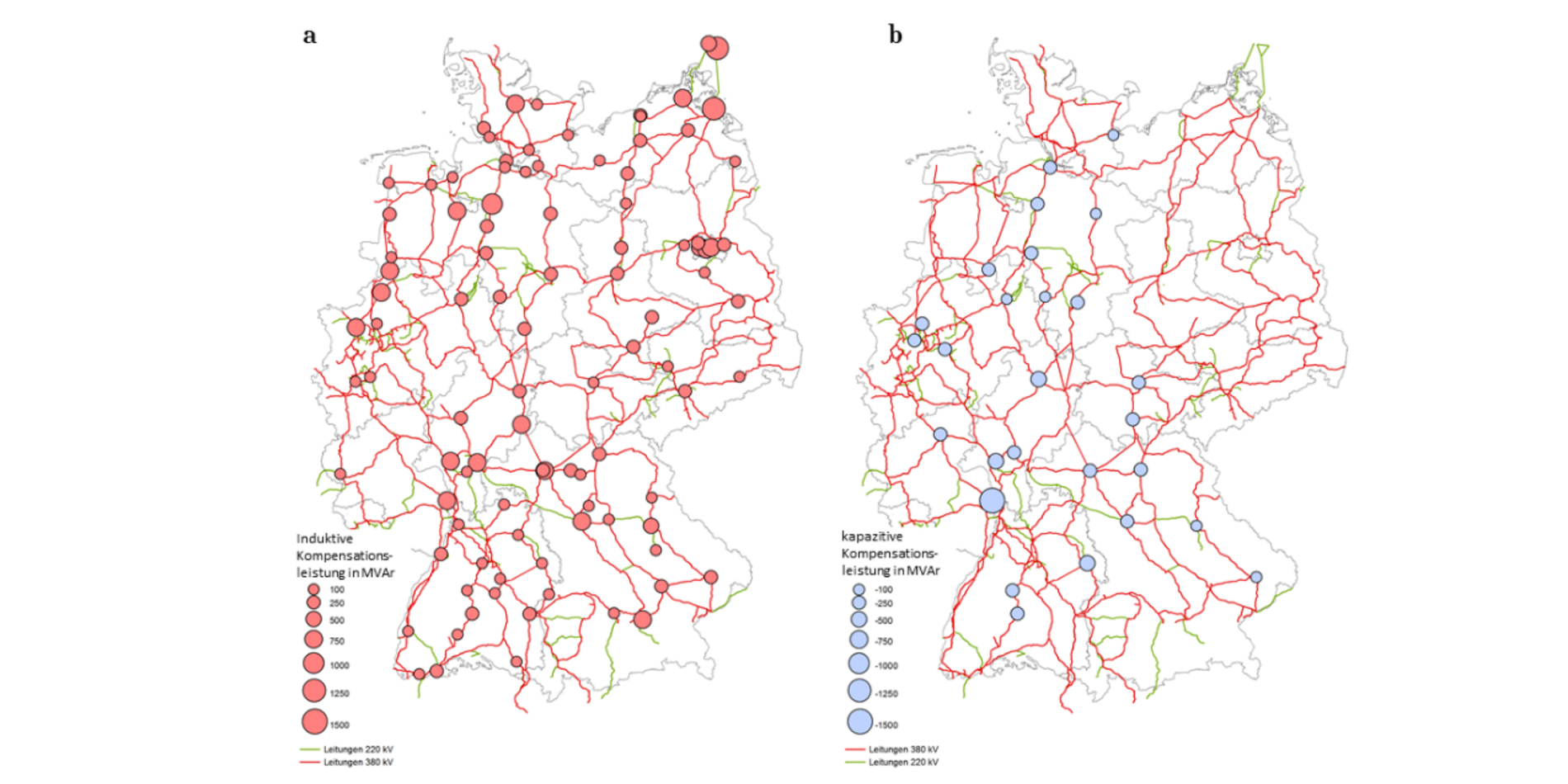
It is evident that, overall and particularly in the eastern federal states of the Federal Republic of Germany, inductive compensation systems are predominantly being planned. The reason for this is that the increasing level of cabling in low- and medium-voltage networks, combined with the general preference for cables in network expansion, is already shifting the operating ranges of the networks into the capacitive range. Particularly during periods of low load, this can lead to a considerable need for compensation, which is nowadays often passed on to the upstream network levels. The reactive power study commissioned by the BMWi and carried out by FENES has shown that, proportionally, the greatest demand for reactive power exists in the transmission grid and that this will continue to rise. At the same time, the phasing out of large power stations is removing essential sources of reactive power at the transmission grid level, which will result in enormous reactive power deficits here in the future. From an economic perspective and to maintain system stability, more reactive power should be provided from the distribution network in future. To make this possible, controllable, highly dynamic and economically competitive sources of reactive power must be developed within the distribution network.
Project Objectives
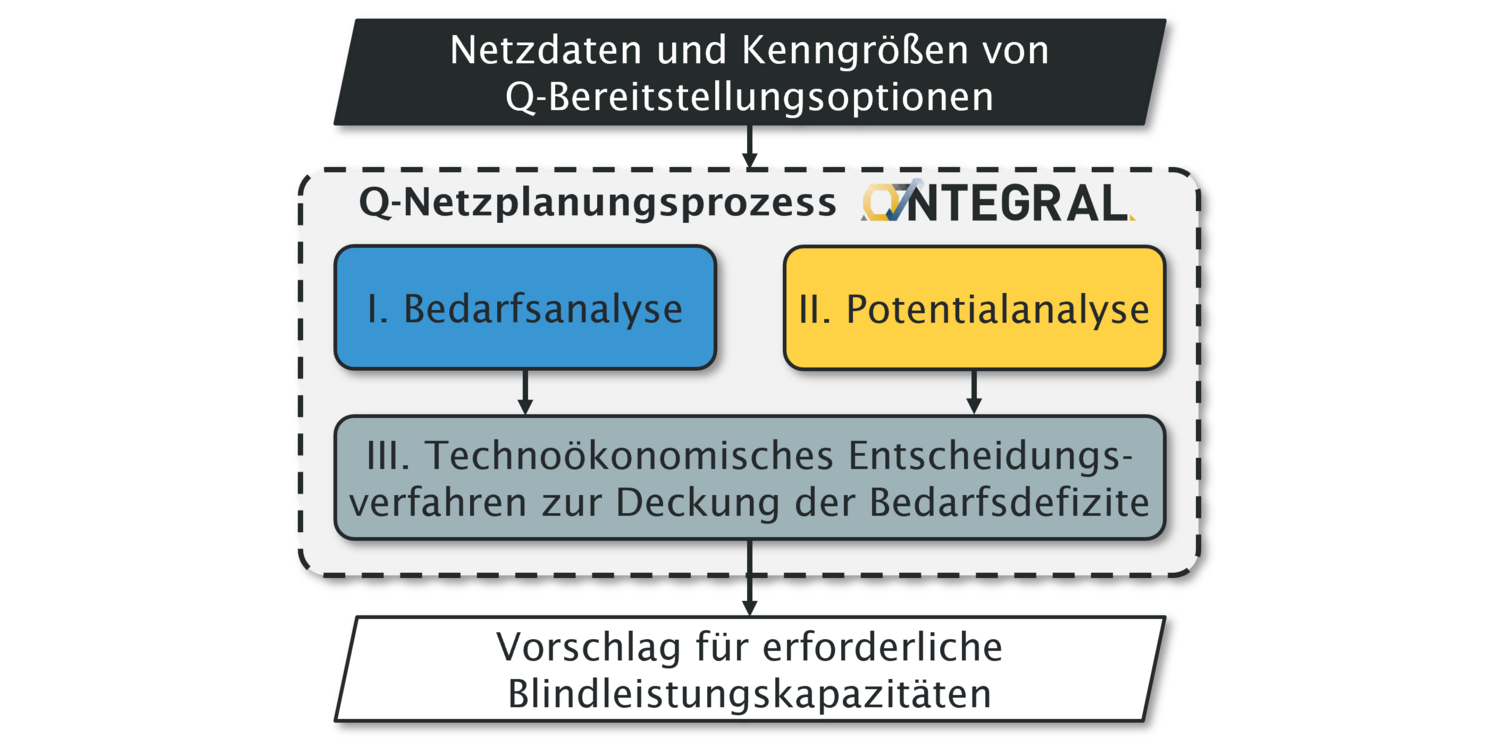
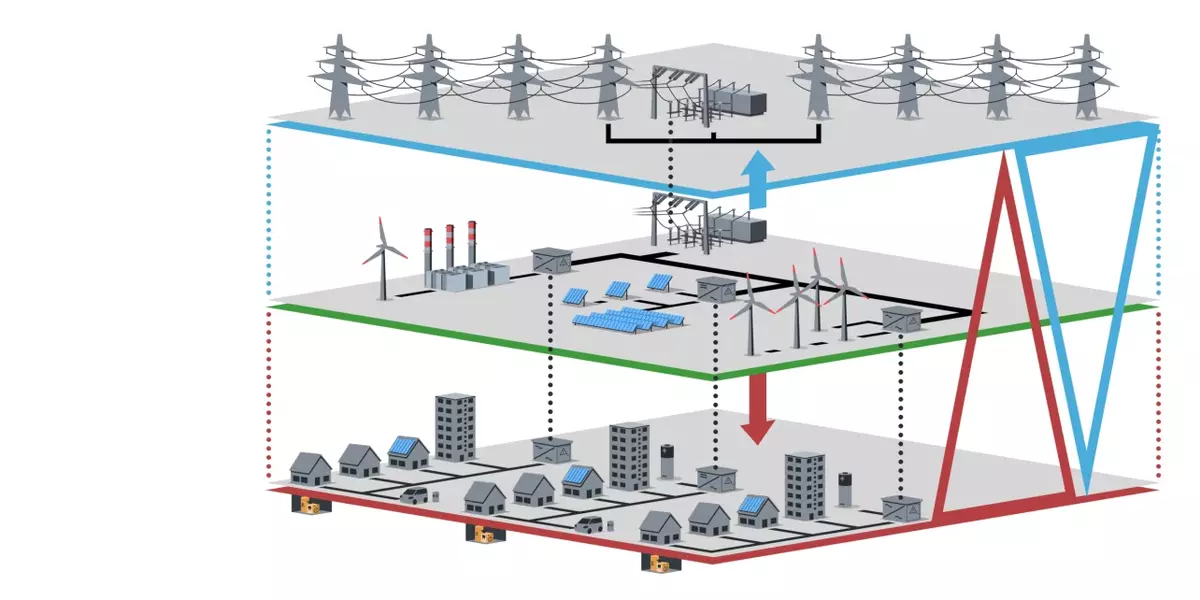
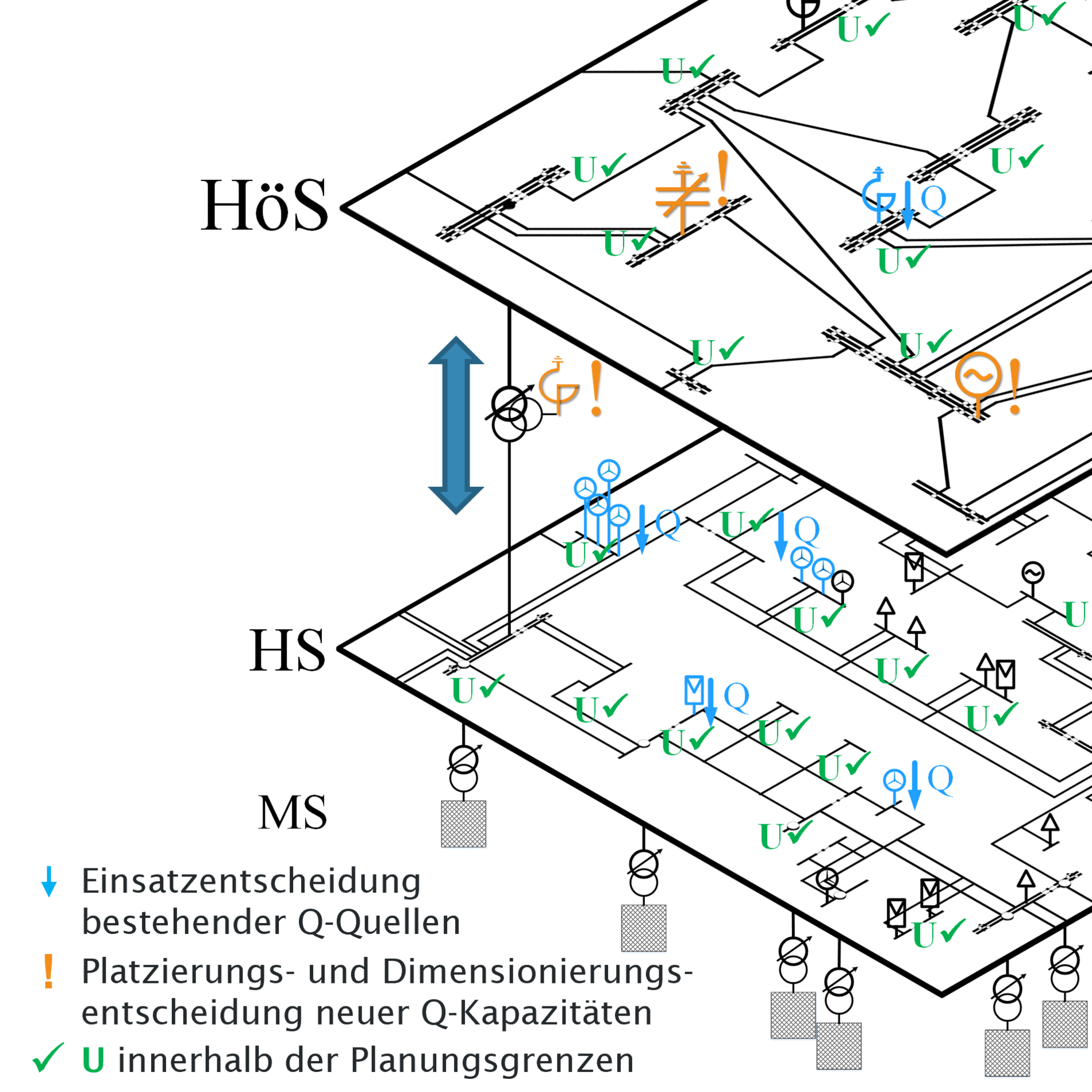
Against this background, the overarching objective of the project is to take a holistic view of the ‘reactive power’ issue. The potential of the various supply options at distribution and transmission network levels is to be analysed from both technical and economic perspectives and made usable. These will then be integrated into a reactive power management system that spans grid operators and voltage levels (see Figure 2). In doing so, methods will be investigated to take reactive power requirements into account as early as the grid planning stage and to allocate them in an economically optimal manner.
Tasks of the Research Centre for Energy Networks and Energy Storage
The aim of the Research Centre for Energy Networks and Energy Storage was to develop process concepts and approaches for optimising the utilisation of existing reactive power sources (marked in light blue in Figure 2) and to locate and dimension new, additionally required reactive power capacities within the grid in a technically and economically optimal manner (marked in orange in Figure 2). Load flow and fault simulations are used to replicate power flows in grid models, whilst node voltages are maintained within defined design limits using optimisation algorithms. This enables computer-aided recommendations for action to be derived, which are intended to assist in making investment or operational decisions regarding the required reactive power capacity. In collaboration with the East German transmission and distribution system operators involved in the project – 50Hertz Transmission GmbH, E.DIS Netz GmbH, WEMAG Netz GmbH and TEN Thüringer Energienetze GmbH & Co. KG, the concepts were developed with a practical focus and on a cross-operator basis, and were applied within their respective network regions.